Abbott
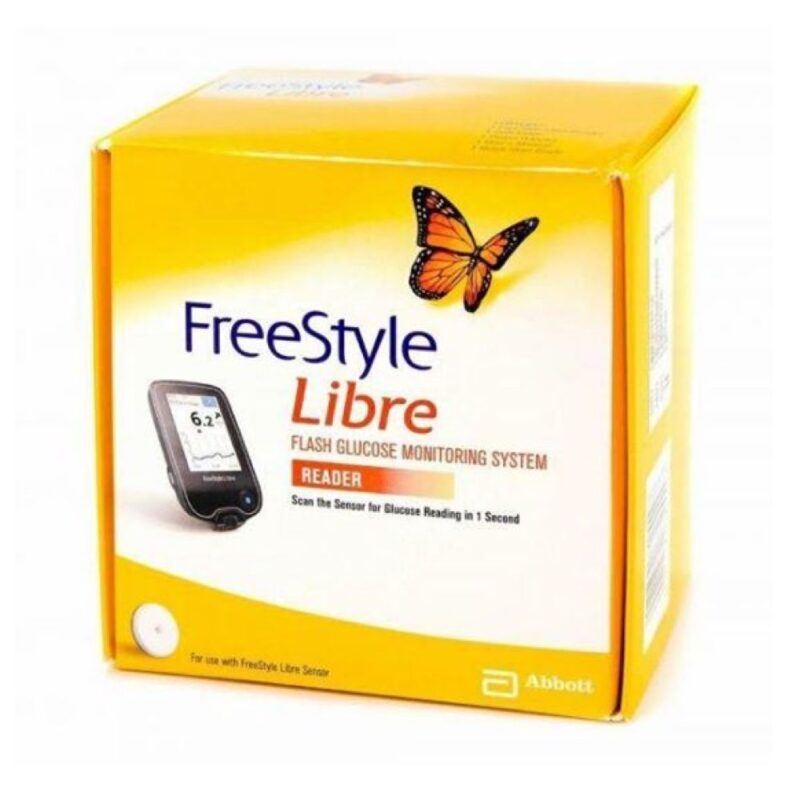
Freestyle Libre Reader flash glucose monitoring system
Freestyle Libre Reader flash glucose monitoring system
Couldn't load pickup availability
What Is the FreeStyle Libre Reader Flash Glucose Monitor?
Managing diabetes day to day involves a lot of decisions — and having reliable glucose data at your fingertips makes those decisions easier. The freestyle libre reader is a handheld scanning device made by Abbott that works alongside a small wearable sensor to give you a real-time picture of your glucose levels without the need for routine finger-prick testing. At £79.99, it offers a practical, reusable alternative to traditional blood glucose meters for people who want more continuous insight into how their glucose is behaving throughout the day.
Flash glucose monitoring is recognised by the NHS as a clinically validated approach to glucose management for people living with diabetes. The reader stores up to 90 days of glucose data and displays trend arrows so you can see not just where your glucose is right now, but which direction it is heading. If you are exploring your options for diabetes monitoring, the FreeStyle Libre system is one of the most widely used flash monitoring systems available in the UK.
How Does the FreeStyle Libre Reader Work?
The system works in two parts: a small, round sensor worn on the back of the upper arm, and the reader itself. You do not need to prick your finger every time you want a reading. Instead, you simply hold the reader close to the sensor for about one second. Here is what happens during that scan:
- The sensor's filament sits just beneath the skin and measures glucose in the interstitial fluid (the fluid surrounding your cells).
- The reader receives the glucose data wirelessly via near-field communication (NFC).
- Your current glucose level is displayed instantly, along with a trend arrow showing whether levels are rising, falling, or stable.
- Up to 8 hours of historical glucose data is shown in a graph format on the reader screen.
- The reader stores up to 90 days of readings, which you can review or share with your healthcare team.
It is worth noting that the reader measures interstitial glucose, not blood glucose directly. This means readings can lag slightly behind blood glucose during periods of rapid change — for example, after eating or during exercise.
Who Should Use the FreeStyle Libre Reader?
The FreeStyle Libre Reader is intended for adults aged 18 and over who have been diagnosed with diabetes and need to monitor their glucose levels regularly. It is particularly suited to people who find frequent finger-prick testing uncomfortable or inconvenient. Your diabetes care team can advise whether flash glucose monitoring is appropriate for your individual situation.
- Adults with type 1 diabetes who require frequent glucose monitoring.
- Adults with type 2 diabetes on insulin or other glucose-lowering medicines.
- People who want to understand how food, exercise, and lifestyle affect their glucose levels.
- Those who prefer a discreet, needle-free scanning method over routine finger-prick testing.
How Does the FreeStyle Libre Reader Compare to a Traditional Blood Glucose Meter?
| Feature | FreeStyle Libre Reader | Traditional Blood Glucose Meter |
|---|---|---|
| Testing method | Scan sensor — no routine finger prick | Finger-prick blood sample required each time |
| Glucose trend data | Yes — trend arrows and 8-hour graph | No — single point-in-time reading only |
| Data storage | Up to 90 days on device | Varies — typically 30–500 readings |
| Sensor wear time | Up to 14 days per sensor | N/A — no wearable sensor |
Is the FreeStyle Libre Reader Suitable for All Patients With Diabetes?
The freestyle libre reader is not suitable for everyone. It is not recommended for use in children under 4 years old, and the sensor is not approved for use during pregnancy without specific clinical guidance. People who are critically ill, or whose glucose levels are changing very rapidly, should confirm readings with a traditional finger-prick blood glucose test. If you take high-dose paracetamol (over 1,000 mg per dose), this may affect sensor accuracy — always check with your pharmacist or diabetes nurse. You can also explore our range of electrical health and diagnostic devices for other monitoring options.
This product is a medicine. Speak to your doctor or pharmacist before using if you have an underlying medical condition or are taking other medicines.
FreeStyle Libre Reader specifications
| Treatment category | Diabetes monitoring / Flash glucose monitoring |
| Mechanism of action | NFC scan of wearable sensor measuring interstitial glucose via electrochemical detection |
| Effective for | Continuous glucose trend monitoring in adults with diabetes |
| Suitable for | Adults aged 18 and over with type 1 or type 2 diabetes |
| Active ingredient | N/A — medical device |
| Pack size | 1 reader (sensors sold separately) |
| UK classification | Class IIb medical device (CE/UKCA marked) |
| Preparation | Handheld electronic reader |
| Route of administration | Transcutaneous sensor scan (NFC) |
Specifications of FreeStyle Libre Reader
What Is the FreeStyle Libre Reader and What Is It Used For?
The FreeStyle Libre Reader is a handheld medical device manufactured by Abbott. It is used alongside a small wearable glucose sensor to monitor glucose levels in adults with diabetes. Rather than relying on routine finger-prick blood tests, you scan the sensor to get an instant glucose reading. The NHS recognises flash glucose monitoring as a clinically appropriate method for glucose management in people with diabetes who meet certain criteria.
The reader is designed to help you understand your glucose patterns over time — not just a single snapshot. It displays your current glucose level, a directional trend arrow, and a graph of the past 8 hours. This kind of data can help you and your healthcare team make more informed decisions about diet, activity, and medication.
What Do You Need to Know Before Using the FreeStyle Libre Reader?
Before you start using this system, there are some important safety points to be aware of. The reader is a medical device, not a medicine, but it still carries specific contraindications and warnings you should review carefully.
Do not use the FreeStyle Libre Reader if:
- You are under 18 years of age (the system is not approved for paediatric use without clinical supervision).
- You are pregnant — consult your diabetes care team before use, as specific guidance applies.
- You are critically ill or in a clinical setting where rapid glucose changes are expected without medical supervision.
- You have a known allergy to the sensor adhesive materials.
Important warnings:
- Always perform a finger-prick blood glucose test if your symptoms do not match your sensor reading.
- Do not make treatment decisions based on sensor readings alone during periods of rapidly changing glucose.
- The sensor should not be worn during MRI scans, CT scans, X-rays, or diathermy treatment — remove it beforehand.
- Avoid exposing the reader or sensor to extreme temperatures or direct sunlight for prolonged periods.
Potential interactions affecting sensor accuracy:
- High-dose paracetamol (over 1,000 mg per dose) may cause falsely elevated glucose readings from the sensor.
- Ascorbic acid (vitamin C) supplements at high doses may also affect accuracy — check with your pharmacist if you take vitamins and supplements regularly.
How Should You Use the FreeStyle Libre Reader?
Setting up and using the FreeStyle Libre system is straightforward, but it is important to follow the steps correctly to get accurate readings. The sensor must be applied first before the reader can be used.
- Charge the reader fully before first use using the supplied USB cable.
- Set the date, time, and your preferred glucose unit (mmol/L) on the reader during initial setup.
- Apply the sensor to the back of your upper arm using the sensor applicator — it is a quick, largely painless process.
- Wait 60 minutes after applying a new sensor before taking your first scan (warm-up period).
- Hold the reader within 4 cm of the sensor for approximately one second to complete a scan.
- Read your current glucose level, trend arrow, and 8-hour graph on the reader screen.
- Scan at least every 8 hours to ensure continuous data capture — the sensor only stores 8 hours of data at a time.
- Replace the sensor every 14 days (sensors are single-use and sold separately).
| Indication | Age Group | Scan Frequency | Sensor Wear Duration |
|---|---|---|---|
| Type 1 diabetes | Adults 18+ | At least every 8 hours | Up to 14 days per sensor |
| Type 2 diabetes | Adults 18+ | At least every 8 hours | Up to 14 days per sensor |
What Are the Possible Side Effects of the FreeStyle Libre Reader?
The reader itself does not cause side effects as it is an external scanning device. However, the wearable sensor — which is applied to the skin — can cause reactions in some people. Most are mild and resolve on their own.
Common side effects (related to sensor wear):
- Redness or mild skin irritation at the sensor application site.
- Itching under or around the sensor adhesive.
- Minor bruising or discomfort when the sensor is applied or removed.
Less common side effects:
- Allergic contact dermatitis — a more pronounced skin reaction to the adhesive.
- Sensor detachment due to sweating, swimming, or physical activity.
- Inaccurate readings during periods of very rapid glucose change (e.g. immediately after eating or intense exercise).
If you experience a severe skin reaction, persistent redness, swelling, or signs of infection at the sensor site, remove the sensor and contact your GP or diabetes nurse. For general skin concerns, our skin care range may help with mild irritation management.
How Should You Store the FreeStyle Libre Reader?
- Store the reader at temperatures between 10°C and 45°C.
- Store unused sensors at 4°C to 25°C — do not freeze them.
- Keep sensors away from direct sunlight and humid environments.
- Do not store the reader or sensors in a car glove box during hot weather, as temperatures can exceed safe limits.
- Keep out of reach of children.
- Do not use a sensor beyond its printed expiry date.
- The reader does not require refrigeration — room temperature storage is fine.
References
- https://www.nhs.uk/conditions/type-1-diabetes/living-with-type-1-diabetes/continuous-glucose-monitoring-cgm-and-flash-monitoring/
- https://www.nhs.uk/conditions/diabetes/
- https://www.nhs.uk/conditions/type-1-diabetes/
- https://www.nhs.uk/conditions/type-2-diabetes/
- https://www.nice.org.uk/guidance/ng17
Written and reviewed by our qualified team
Your safety and success are our highest priorities. Our medical team rigorously evaluates every product and piece of advice we provide, ensuring you receive only the most effective, science-backed solutions available.
Frequently Asked Questions
Where can I buy the FreeStyle Libre Reader online in the UK?
You can buy the FreeStyle Libre Reader from Cured Pharmacy, a GPhC-registered UK online pharmacy, for £79.99. It is also stocked in some high-street pharmacies and directly through Abbott. For a full range of monitoring products, visit our diabetes monitoring collection.
How does the FreeStyle Libre Reader work in the body?
The reader works by scanning a small wearable sensor placed on the back of the upper arm. The sensor's tiny filament sits just beneath the skin and measures glucose in the interstitial fluid — the fluid surrounding your cells — using an electrochemical process. A one-second scan transfers this data wirelessly to the reader via NFC, displaying your current glucose level, a trend arrow, and up to 8 hours of historical data.
Do I need a prescription to buy the FreeStyle Libre Reader?
No, the FreeStyle Libre Reader is available over the counter in the UK without a prescription. However, if you have type 1 diabetes, you may be eligible to receive FreeStyle Libre sensors on NHS prescription — speak to your GP or diabetes care team to find out if you qualify.
How do I use the FreeStyle Libre Reader step by step?
First, charge the reader and complete the initial setup (date, time, and glucose units). Apply the sensor to the back of your upper arm using the applicator, then wait 60 minutes for the sensor to warm up. After that, simply hold the reader within 4 cm of the sensor for about one second to get your glucose reading — scan at least every 8 hours to maintain continuous data.
How often should I scan with the FreeStyle Libre Reader?
You should scan at least once every 8 hours, because the sensor only stores 8 hours of glucose data at a time — if you go longer without scanning, you will lose that data. Many people scan more frequently, for example before and after meals, before driving, and before exercise, to get a fuller picture of their glucose patterns.
Is the FreeStyle Libre Reader compatible with FreeStyle Libre 2 sensors?
No. The original FreeStyle Libre Reader is only compatible with FreeStyle Libre 1 sensors. If you want to use FreeStyle Libre 2 sensors — which offer optional real-time glucose alarms — you will need the FreeStyle Libre 2 reader or a compatible smartphone running the FreeStyle LibreLink app. Always check compatibility before purchasing sensors separately.
What are the side effects of using the FreeStyle Libre sensor?
The reader itself does not cause side effects, but the wearable sensor can cause skin reactions in some people. Common issues include redness, itching, or mild irritation at the sensor site. Less commonly, some people develop allergic contact dermatitis from the adhesive — if this happens, remove the sensor and speak to your GP.
Can I use the FreeStyle Libre Reader if I have type 2 diabetes?
Yes, the FreeStyle Libre Reader is suitable for adults with both type 1 and type 2 diabetes. It is particularly useful for people with type 2 diabetes who are on insulin or other glucose-lowering medicines and need to monitor their levels regularly. Your GP or diabetes nurse can advise whether flash glucose monitoring is appropriate for your specific treatment plan.
How accurate is the FreeStyle Libre Reader compared to a finger-prick test?
The FreeStyle Libre system measures interstitial fluid glucose rather than blood glucose directly, which means readings can lag slightly behind blood glucose — particularly during rapid changes such as after eating or during intense exercise. If your symptoms do not match your sensor reading, always confirm with a traditional finger-prick blood glucose test. The system is clinically validated and widely used in NHS diabetes care.
Who is eligible for the FreeStyle Libre Reader on the NHS?
The reader itself is not typically provided on the NHS, but FreeStyle Libre sensors may be prescribed on the NHS for people with type 1 diabetes who meet NICE criteria, and for some people with type 2 diabetes on insulin. Eligibility depends on your individual clinical situation — speak to your GP or diabetes specialist team. You can purchase the reader privately from Cured Pharmacy for £79.99.
What happens if my FreeStyle Libre sensor falls off before 14 days?
If your sensor detaches before the 14-day wear period is complete, it cannot be reapplied — you will need to use a new sensor. To help sensors stay in place, make sure your skin is clean, dry, and free from lotions or oils before application. Some people use additional adhesive patches over the sensor during swimming or high-intensity exercise.
Can I swim or shower with the FreeStyle Libre sensor?
Yes, the FreeStyle Libre sensor is water-resistant and can be worn while showering, bathing, or swimming in shallow water (up to 1 metre deep for up to 30 minutes). The reader, however, is not waterproof and should not be submerged. Always dry the sensor site gently after water exposure to help maintain adhesion.
What are the alternatives to the FreeStyle Libre Reader?
Alternatives include the FreeStyle Libre 2 system (which adds optional glucose alarms), the Dexcom G6 or G7 continuous glucose monitors (CGMs), and traditional blood glucose meters with test strips. CGMs differ from flash monitors in that they transmit readings automatically without needing a scan. Browse our electrical health and diagnostic range for more options.
How long can I use the FreeStyle Libre Reader for?
The reader itself is a reusable device with no set expiry — it can be used indefinitely as long as it is functioning correctly and the battery holds charge. Each individual sensor is single-use and lasts up to 14 days before it must be replaced. Abbott recommends keeping the reader software updated where applicable.
What does the latest research say about flash glucose monitoring?
Clinical evidence supports flash glucose monitoring as an effective tool for improving glucose management in people with diabetes. Studies have shown that use of the FreeStyle Libre system is associated with reductions in time spent in hypoglycaemia and improvements in HbA1c in some patient groups. NICE guidance (NG17 and NG28) supports the use of flash monitoring for eligible patients with type 1 and type 2 diabetes.
Share